What’s in your wardrobe for space?
Imagine you just get a call, and the person on the other end says, “Get ready, we’re going to space on the first flight tomorrow!” How exciting and amazing does that sound, doesn't it?
One of the main things you do when preparing for a trip is probably packing our bag or suitcase. Usually, we start this with checking the weather at our destination and picking clothes from our wardrobe accordingly. But in this case, we’re traveling to space, and the only thing you need to worry about isn’t the weather. Factors such as pressure, vacuum, radiation, and weightlessness, which we do not consider when traveling to a place on Earth, are also things that must be considered when planning a space journey. If you already have clothing designed for these conditions, there’s no need to worry. But if you don’t, and you’re wondering why it’s necessary, you’re in the right place.

I should mention that the special suit is designed for space or for activities outside a spacecraft is a special clothing designed in such a way that it protects astronauts in the harsh environment of space during space flight, or allows them to move and work while operating in outer space.
—
With the planning of human spaceflight, the question of what to wear during space missions began to arise. It had to be a suit that would protect the astronaut from the harsh conditions of space, both inside the spacecraft and when going outside into space if necessary.
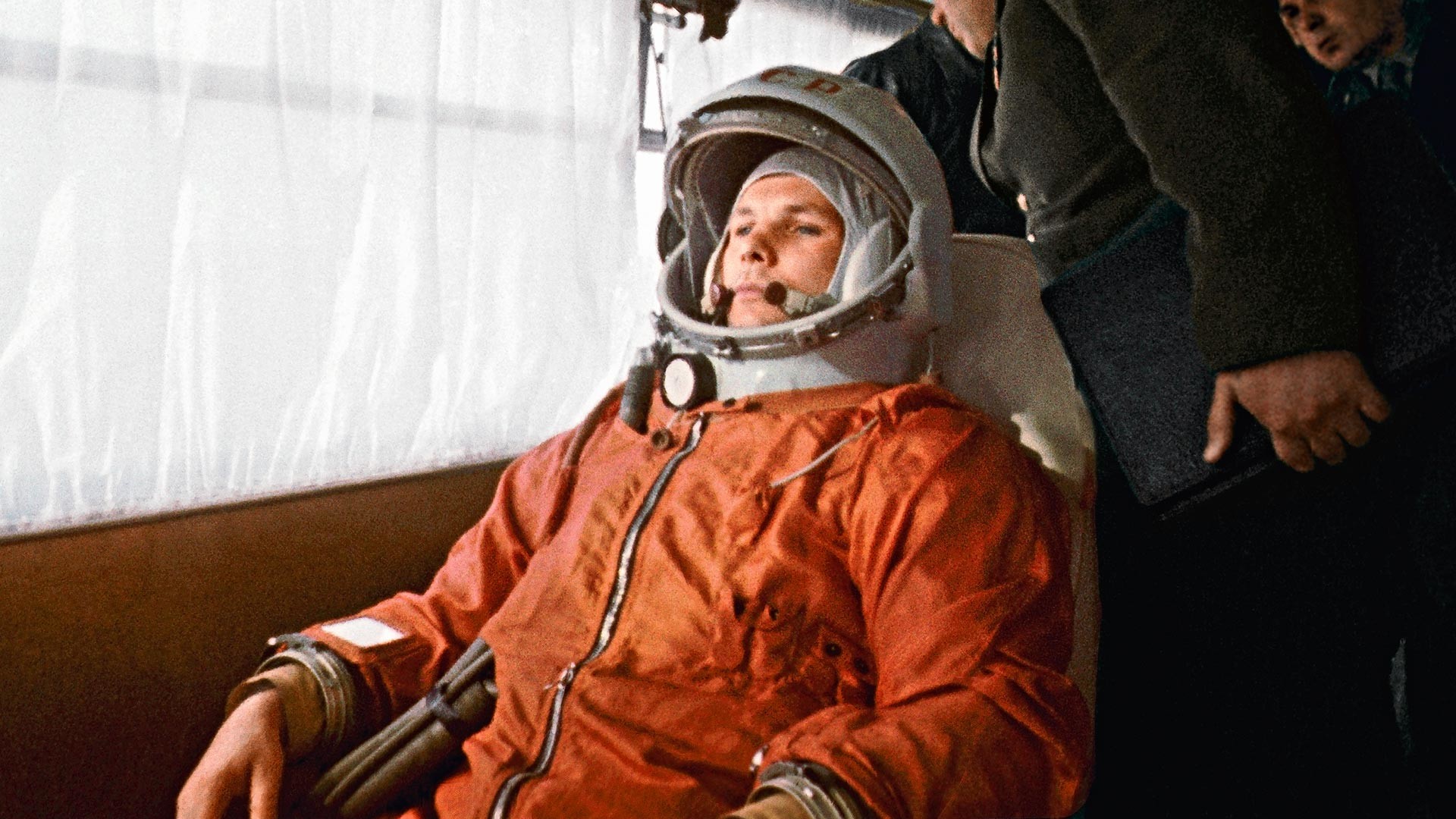
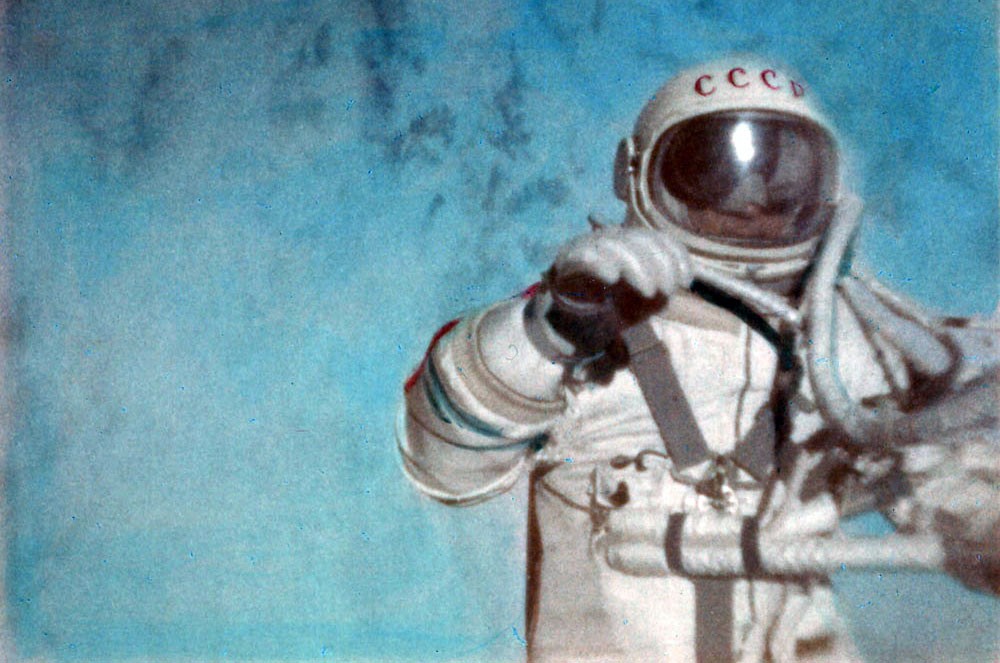
Yuri Gagarin and Alexei Leonov were the first astronauts to wear suits created by the Soviet Union for this purpose.
The famous orange space suit worn by Yuri Gagarin was called SK-1, and the main purpose of the suit was to protect Gagarin from any adverse effects that might occur inside the spacecraft during flight.
Yuri Gagarin, in the SK-1 space suit
Later, based on the SK-1 suit, a suit called Berkut was designed for open space, which Alexei Leonov wore during his spacewalk. The main difference from SK-1 was that Berkut included a backpack (oxygen balloon) attached to the suit that supplied oxygen outside the spacecraft, as well as a stronger protective layer.
Alexei Leonov, in the Berkut space suit
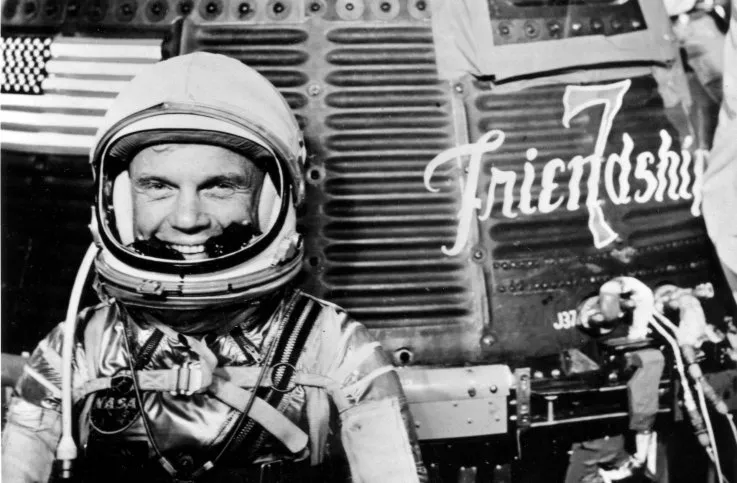
Although the Soviet Union was achieving firsts in space and trying to take the lead in the Space Race, the United States was working for years on the Mercury project, developing a suit of the same name to send the first American into space. Known as the Mercury or “Navy Mark IV” suit, it enabled John Glenn to become the first American to go into space on February 20, 1962.
John Glenn, in the Mercury or “Navy Mark IV” space suit
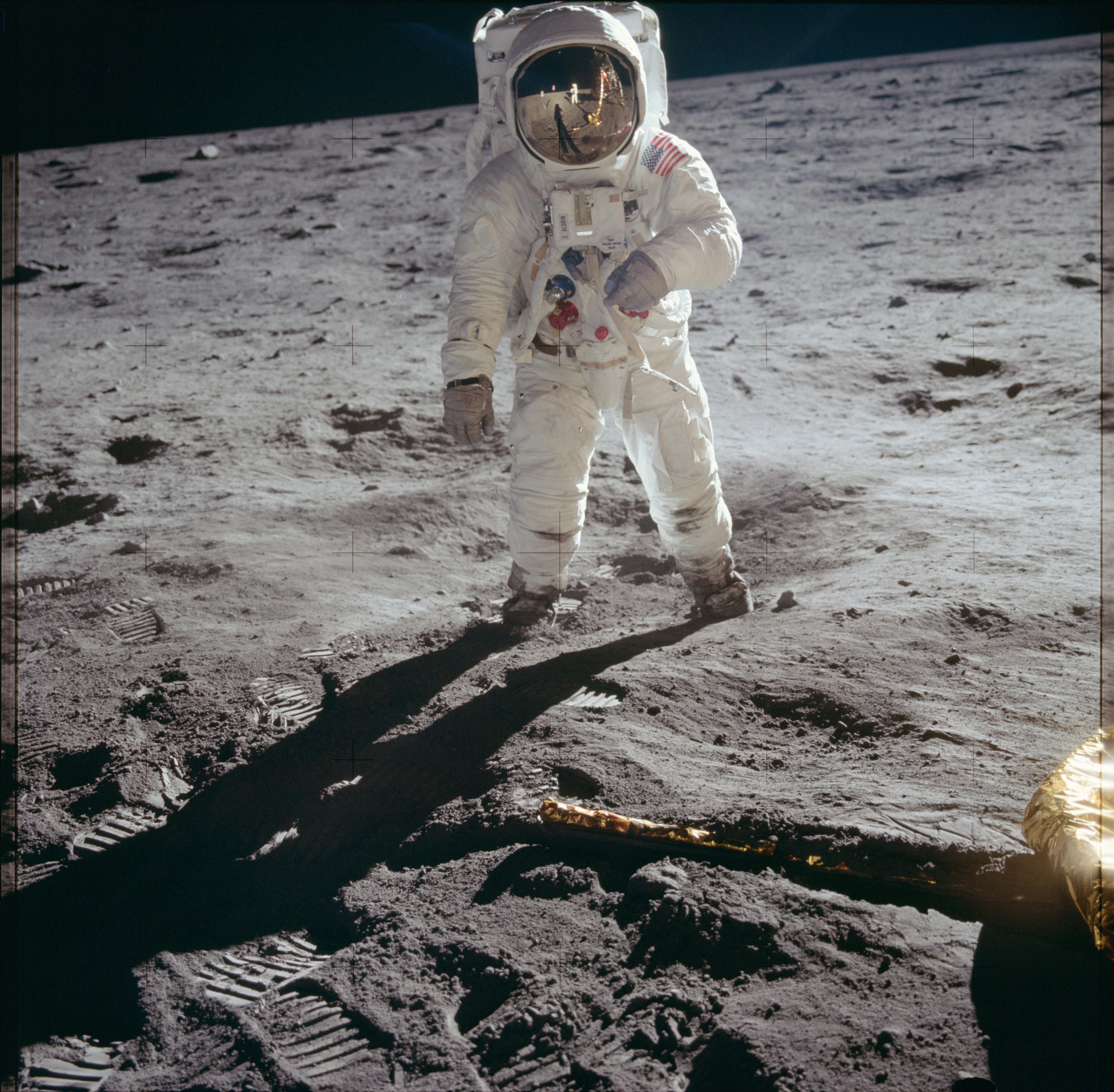
However, undoubtedly, the United States’ greatest achievement in this field was the Apollo suit, developed as part of the Apollo program and named accordingly. The Apollo suit was specially designed to protect astronauts not only in open space but also from the effects of the Moon's surface. As seen in the image below, it is Buzz Aldrin on the Moon, captured by Neil Armstrong’s camera, wearing precisely this suit.
Buzz Aldrin, in the Apollo space suit
One key point to know about space suits is that the suits worn during launch and re-entry are different from those designed for spacewalks, outside the spacecraft. While launch and re-entry suits primarily protect astronauts from pressure differences, suits for use outside the spacecraft are designed not only to protect against pressure differences but also extreme temperature variations, lack of atmosphere, radiation, and weightlessness. They also continuously remove carbon dioxide produced during breathing and supply oxygen. To achieve all of this, spacewalk suits typically consist of around 18,000 components arranged in 14 separate layers.
—
Now, if you’re about to travel to space, you know what to look for in your wardrobe and why. So, tell me, when’s the trip? Wishing to meet in space soon, chau!

© 2026 Zəhra Kosmosda